
Inspired by legend Andy Warhol’s Campbell’s Soup Cans
Fun Facts about Campbell’s Soup Cans:
People thought it was a joke. Some viewers struggled to understand why an ordinary soup can belonged in an art gallery. Critics questioned whether Warhol was making fun of art itself.
Repetition was the point. By repeating nearly identical cans with small differences in labels and flavors, Warhol explored mass production and how consumer products become familiar parts of everyday life.
Campbell’s initially had mixed feelings. The company was uncertain about being associated with the artwork, but the paintings eventually became closely linked to the brand’s identity and cultural history.
The entire set became incredibly valuable. In 1996, New York’s Museum of Modern Art acquired the original 32-painting series from gallery owner Irving Blum for a reported price of more than $15 million.
It helped change what people considered art. Warhol challenged the idea that fine art had to depict historical events, beautiful landscapes, or traditional subjects. An ordinary grocery item could become a masterpiece.
The paintings aren't all exactly identical. Each can features the same basic design, but the soup names, small label details, and colors differ. The subtle variations are part of what makes the complete series interesting.
Andy Warhol’s Campbell’s Soup Cans is currently housed at the Museum of Modern Art (MoMA) in New York City, where all 32 original paintings are listed as on view on Floor 4, in the David Geffen Wing.
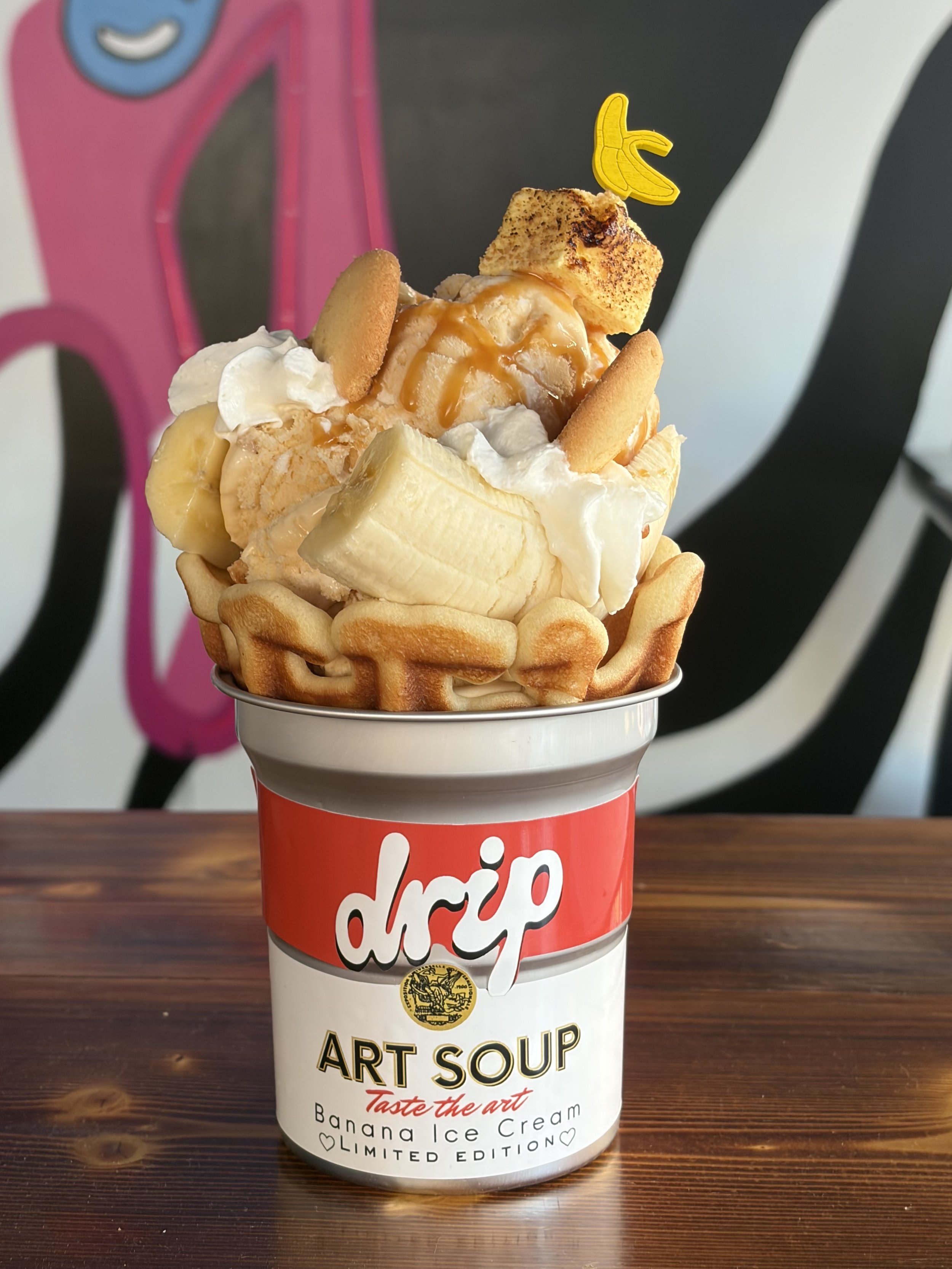
A pop art classic in sundae form. Banana pudding and banana pudding ice cream layered over a waffle base, topped with Nilla wafers, caramel drizzle, fresh banana pieces, whipped cream, and a toasted banana marshmallow. Sweet, nostalgic, and extra, just like Pop Art.
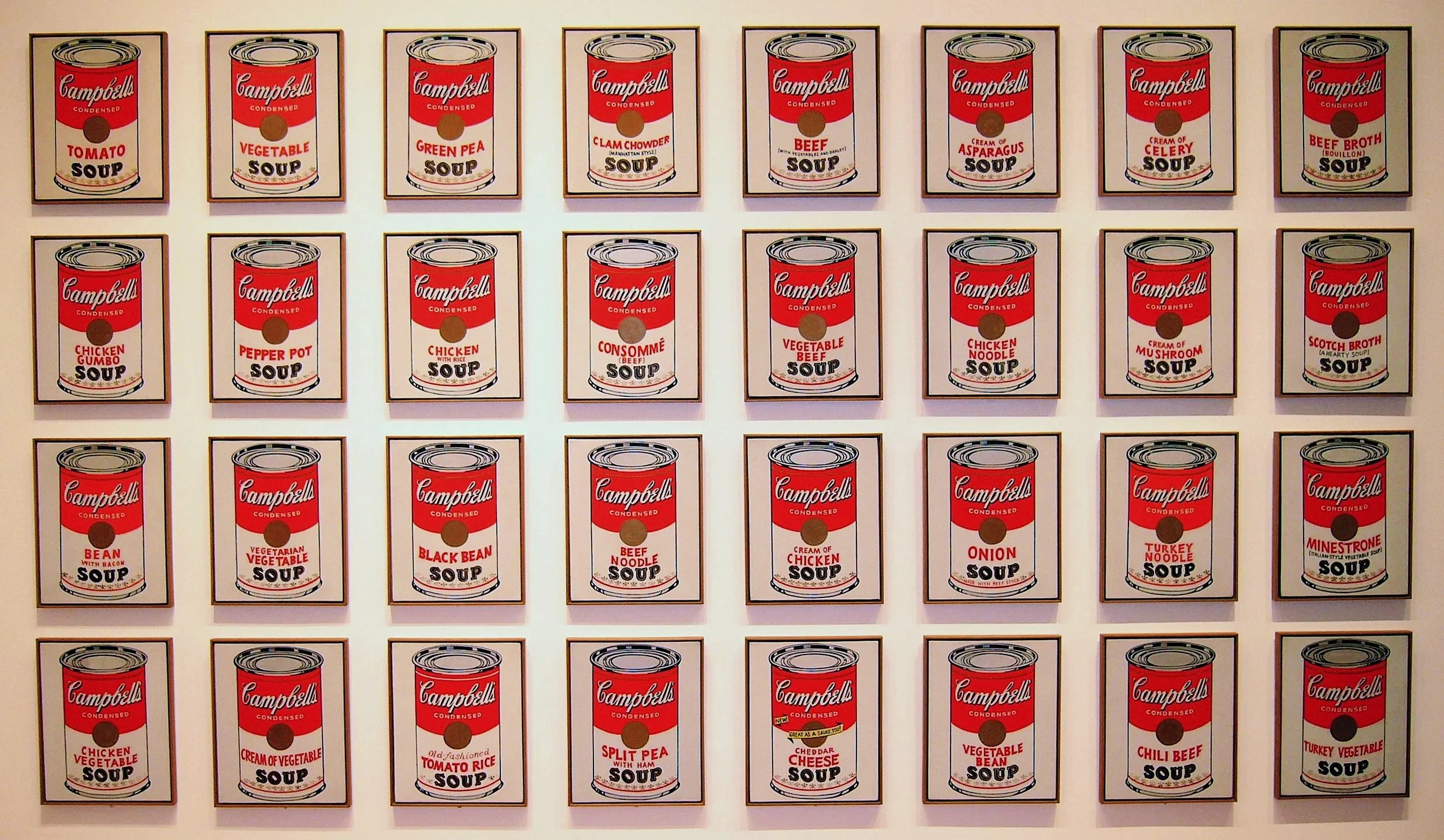
Andy Warhol’s Campbell’s Soup Cans was inspired by his own daily lunch habit. He once said he ate the same soup for lunch nearly every day for 20 years. A friend and art advisor, Muriel Latow, encouraged him to paint something simple and instantly recognizable, leading him to choose Campbell’s soup cans.
Before becoming a fine artist, Warhol worked as a commercial illustrator for major brands, which influenced his clean, graphic style. In 1962, he displayed 32 soup-can paintings at the Ferus Gallery in Los Angeles, arranged on shelves like products in a grocery store. The exhibition confused some viewers, and a competing art dealer even displayed real soup cans in a shop window to mock the show.
Only a handful of paintings sold initially, but gallery director Irving Blum believed the collection belonged together. He bought back the individual works and kept the complete set intact. In 1996, the Museum of Modern Art in New York acquired all 32 paintings. Today, the series is considered a defining work of Pop Art, challenging the boundary between everyday consumer products and fine art.