
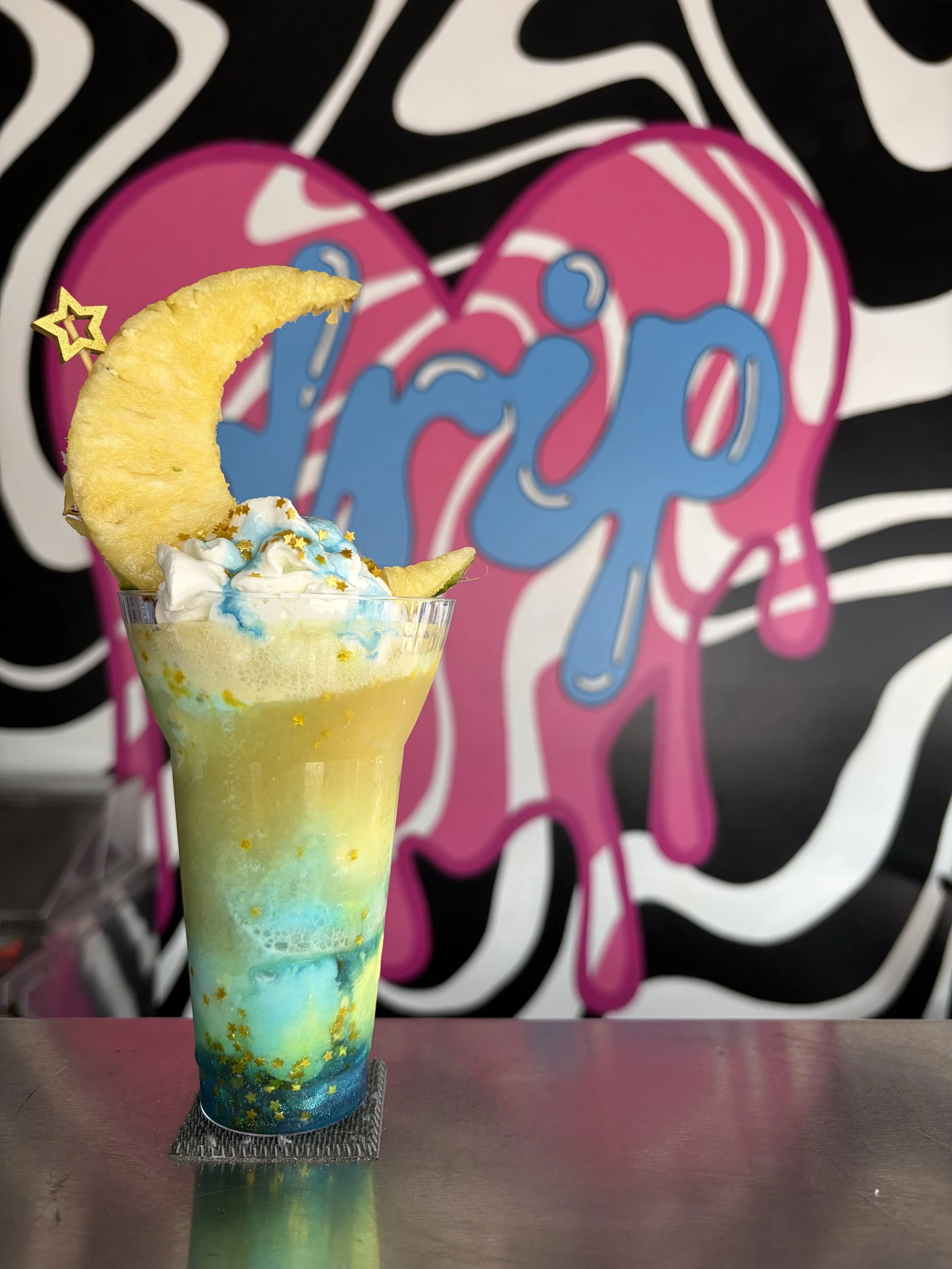
Inspired by Vincent Van Gogh’s timeless masterpiece, The Starry Night.
Fun facts about The Starry Night:
Painted from Memory: Van Gogh painted the scene from his east-facing window, but he omitted the window bars and added an imaginary village and Dutch-style church steeple.
Real Astronomical Feature: The brightest star-like orb in the sky is actually Venus (the morning star), which was genuinely visible in the spring/summer of 1889.
Fluid Dynamics in the Sky: The swirling brushstrokes match the mathematical laws of turbulent flow and align with physicist Andre Kolmogorov's theories on eddies and energy transfer.
Symbolic Cypress Tree: The flame-like cypress tree in the foreground represents death, immortality, and a bridge connecting the earth to the sky.
Considered a Failure: Van Gogh thought the painting was a failure and sold almost no works during his lifetime.
Current Home: The masterpiece has been housed at the Museum of Modern Art (MoMA) in New York City since 1941.
A float of Rocky Mountain cream soda and Superman ice cream, mixed with from scratch glitter-infused blue raspberry syrup, star sprinkles, and topped with a fresh pineapple crescent moon and whip cream.
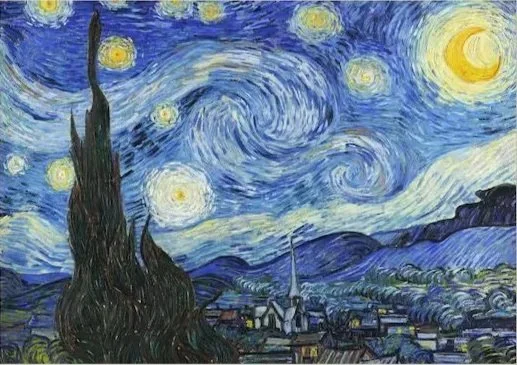
Vincent van Gogh’s The Starry Night, painted in 1889 while he was staying at an asylum in Saint-Rémy, France, is one of the most recognizable masterpieces in Western art. Its swirling skies, brilliant stars, crescent moon, and quiet village create a dreamlike scene that has captivated people for generations.
Often interpreted as a reflection of Van Gogh’s emotional struggles and connection to nature, the painting balances darkness with light, chaos with beauty, and hardship with hope. Its bold brushstrokes and vivid colors bring the night sky to life, inspiring wonder, creativity, and a sense of possibility.
More than a painting, The Starry Night is a timeless reminder that even in our darkest moments, there is beauty to be found in the world around us.